
N-Hale
Medical Prototypes - FA 2021


The N-Hale is a user friendly inhaler set for those suffering from asthma, which includes easy-to-read instructive packaging and an ergonomic inhaler. This device and packaging set aims to increase treatment success rates for users of the common metered-dose rescue inhaler.
The “N” in the name stands for “neutral”, as the form factor is designed to be held in any way the user desires while still remaining comfortable to hold in the hands.
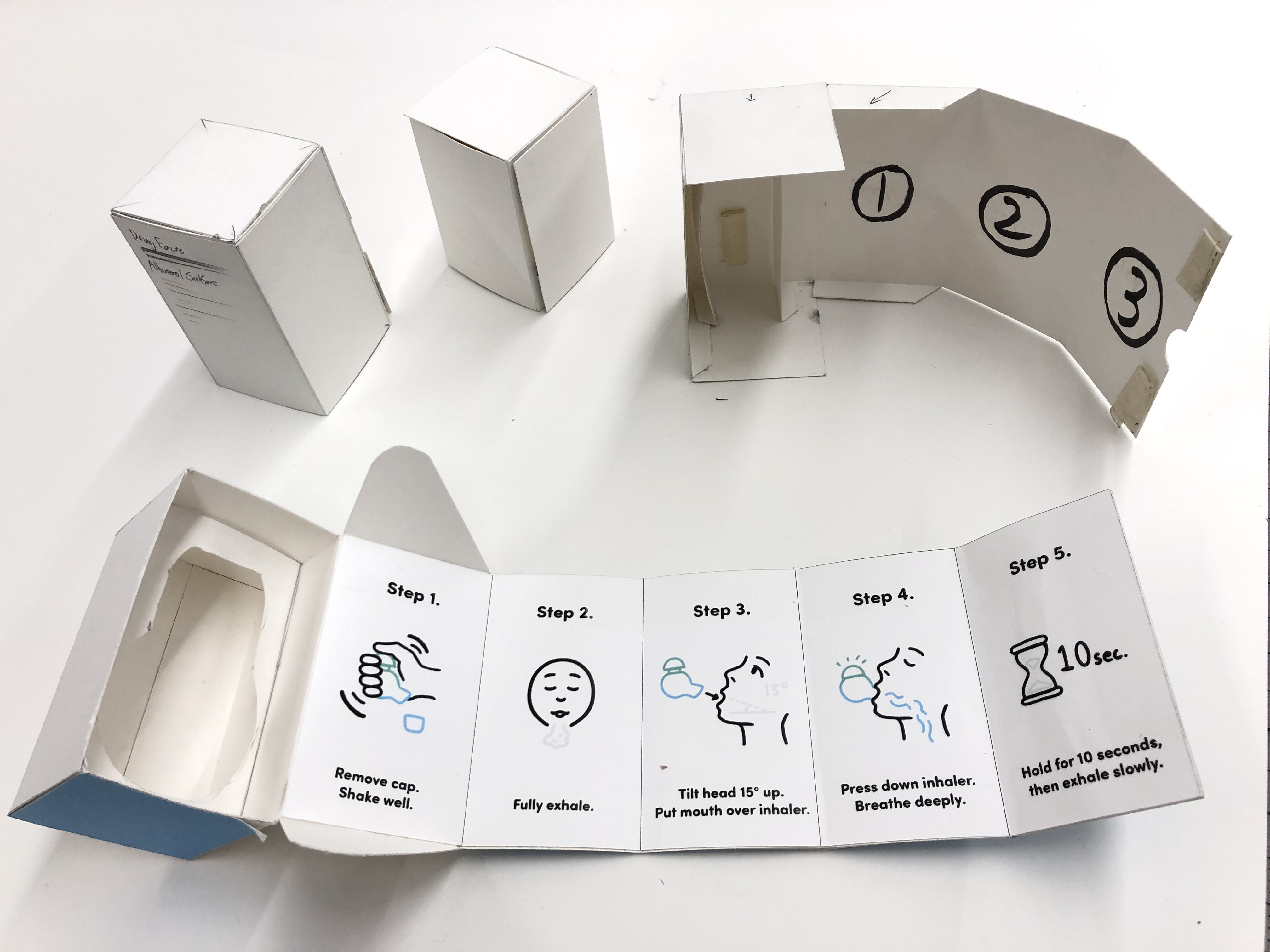
When unboxing the inhaler, the user unrolls the front panel to immediately reveal the instructions for how to use the rescue inhaler. This allows the user to avoid the trouble of looking for instructions within standard pamphlets.
The 5 step instructions include clear imagery and simple wording, allowing users to clearly and easily follow the complex instructions for proper inhaler usage.


Process Work


For many decades, rescue inhalers have been a standard everyday carry item for asthma patients to treat sudden attacks. Metered dose inhalers are among the most common types of rescue inhaler, as I myself have carried one with me for much of my life. Rescue inhalers generally administer Albuterol Sulfate stored within a standard pressurized cartridge, and come with a variety of differently shaped plastic bodies. But all the different plastic bodies share a couple of things in common; they are uncomfortable to hold, unintuitive to utilize, and visually unattractive.
Additionally, rescue inhalers have a shocking 70% failure rate despite decades of medication and technological improvement, with some academic sources citing rates closer to 90%.
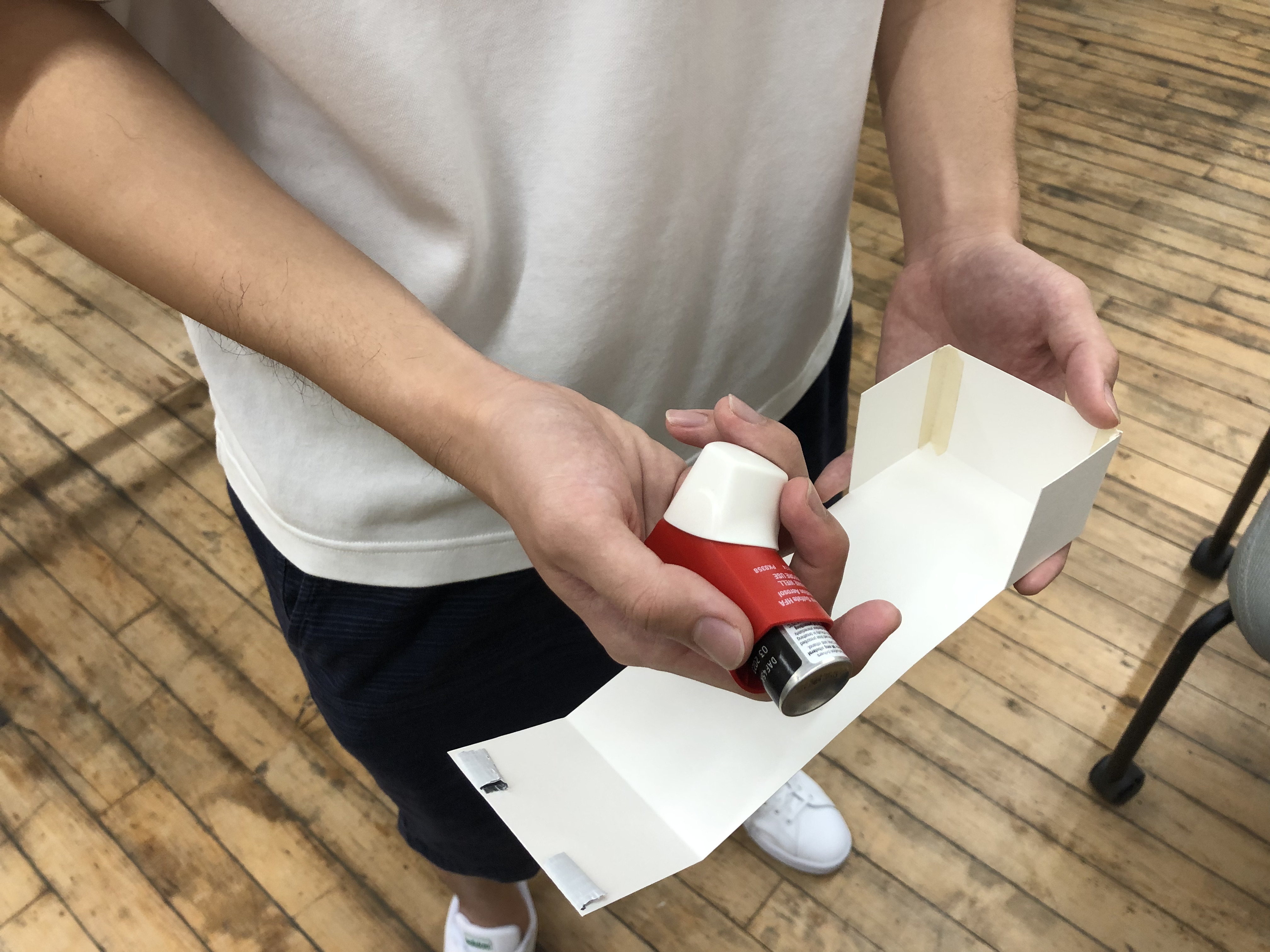
When one unboxes a new inhaler, it becomes immediately obvious why failure rates are so egregiously high. Each inhaler box comes with a standard, government regulated pamplet containing 31 pages of medication and trial information compressed into a long double sided paper. Hidden among the chaos is a small section with instructions on how to use the device, split across 7 steps of confusing wording and minimal diagrams.
During the initial test of my personal inhaler with a handful of individuals, every individual had the same impulse upon finding the pamphlet- skim the words for 5 seconds, then setting it aside to figure out how to use the inhaler on their own. Despite the instructions being crucial for proper usage, not a single person found them or felt compelled to search among the sea of extraneous information. As a result, every participant demonstrated incorrect usage form, with some holding the device upside down.


Pain Points
- Inhalers are often unintuitive and difficult to hold, especially in the way that is suggested by instructions.
- Inhalers are often visually unappealing.
- Inhaler instructions are both difficult to find and confusing to understand.
Design Opportunities
- Create an ergonomic form factor that fits various different holding methods.
- Design the body and package graphic design to be more attractive and less jarring to the eye.
- Create easy to read instructions that are immediately availble to the user, with understandable graphics.
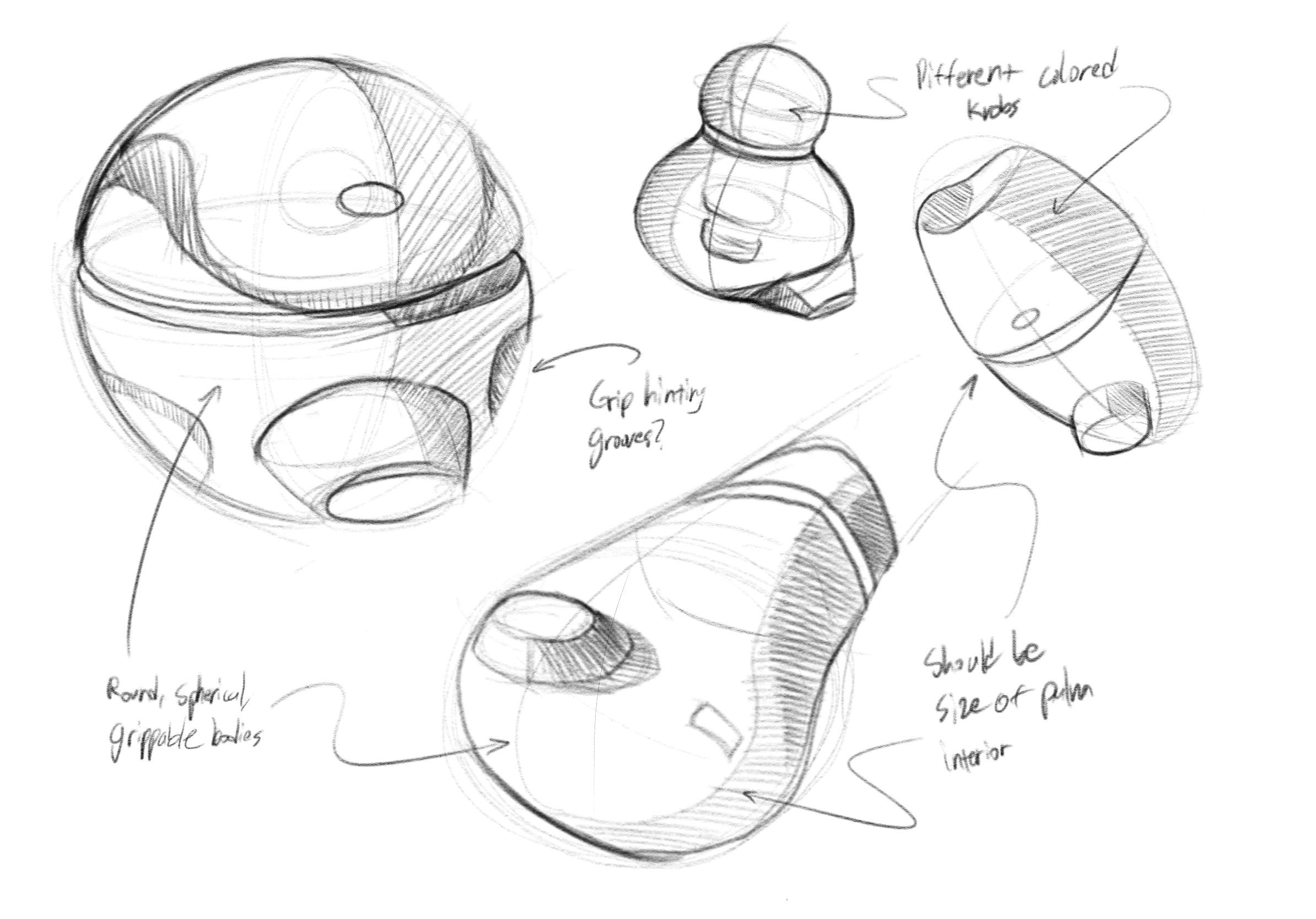
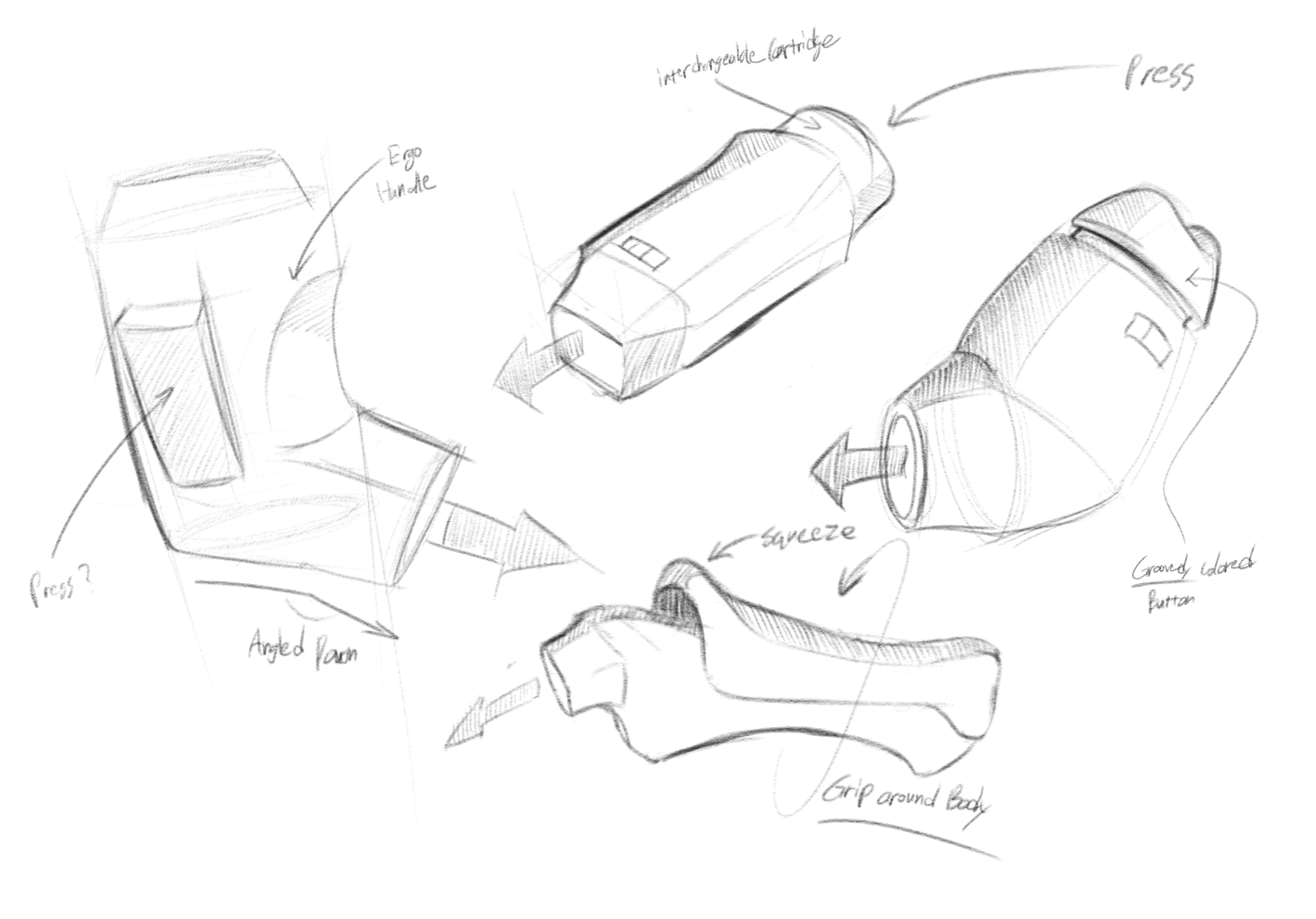
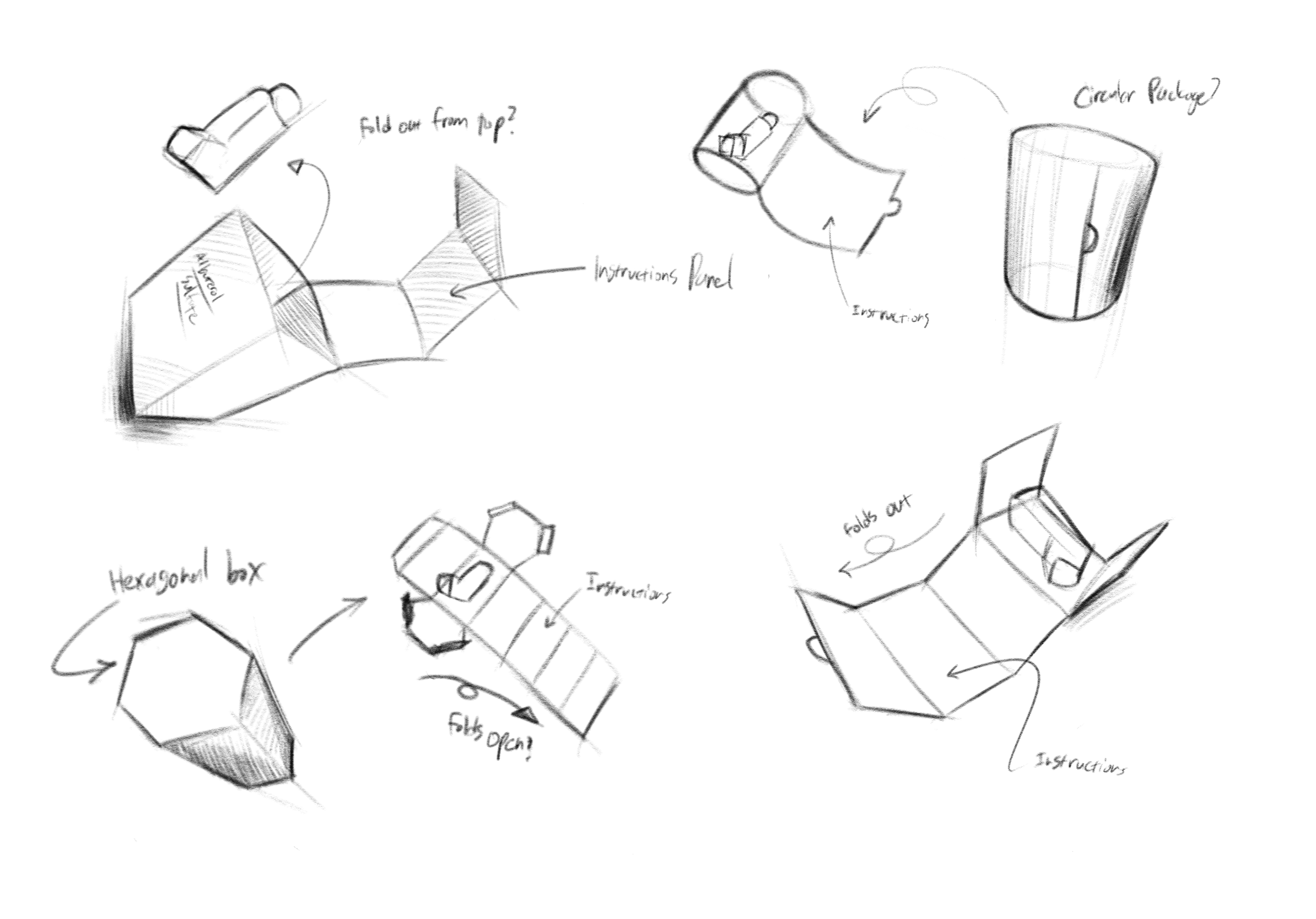
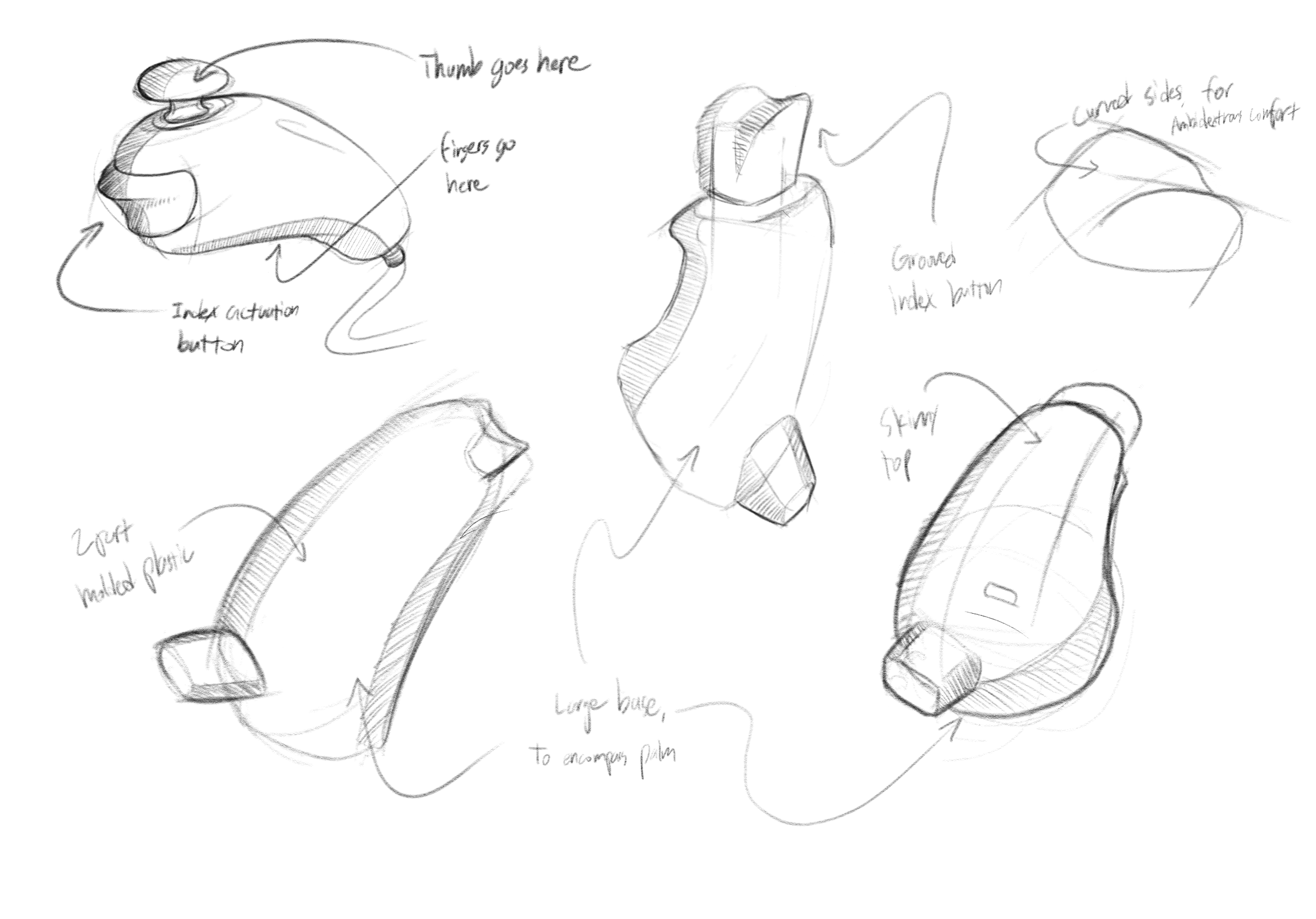
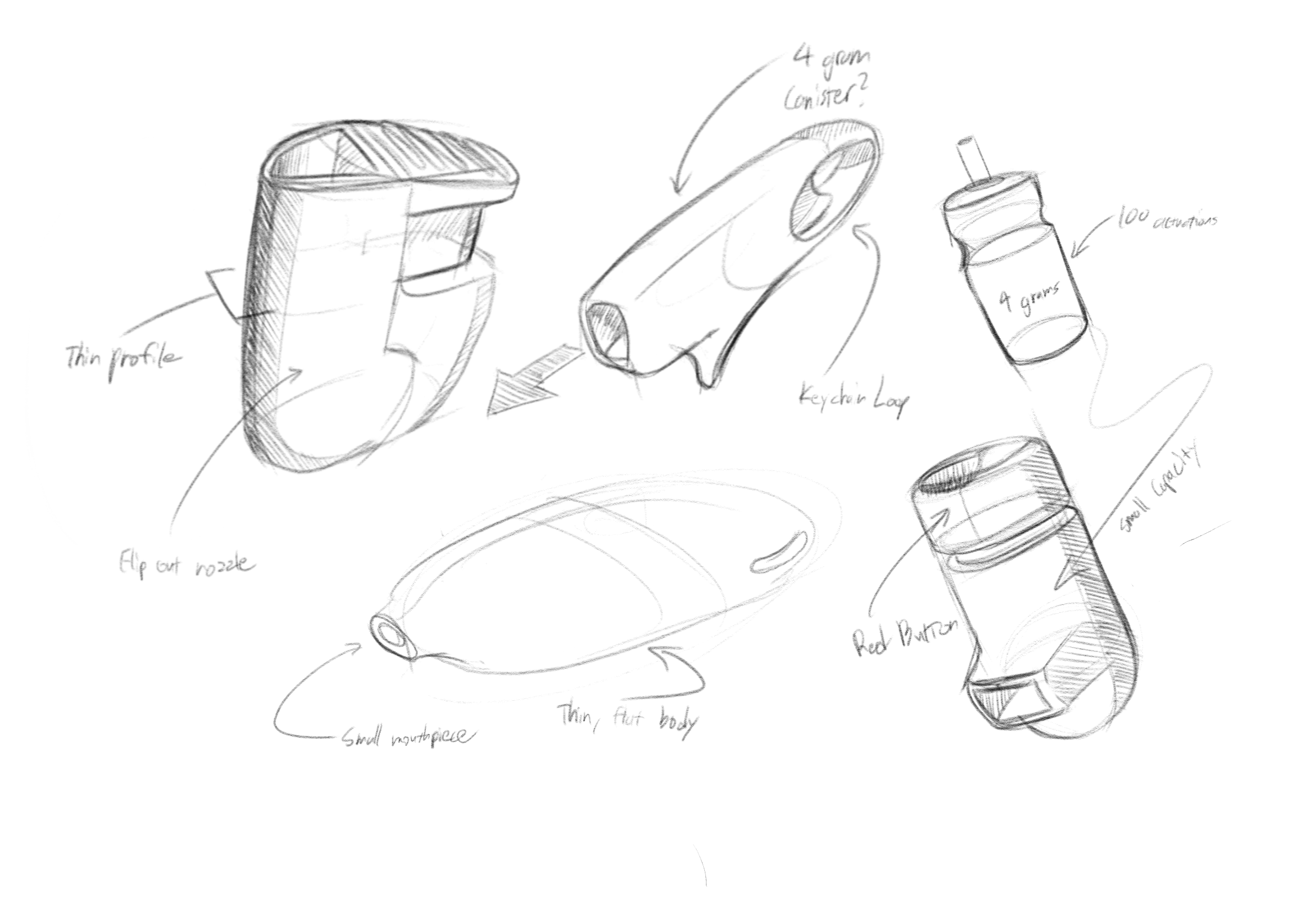
One of the biggest challenges during the process was finding an effective form factor that was comfortable to hold, but doesn’t force a user to hold it in a certain way. Everyone across the globe has different preferences and potential hand disabilities, meaning there can be countless unique ways to hold an inhaler while still providing effective treatment- provided the inhaler is not upside down.
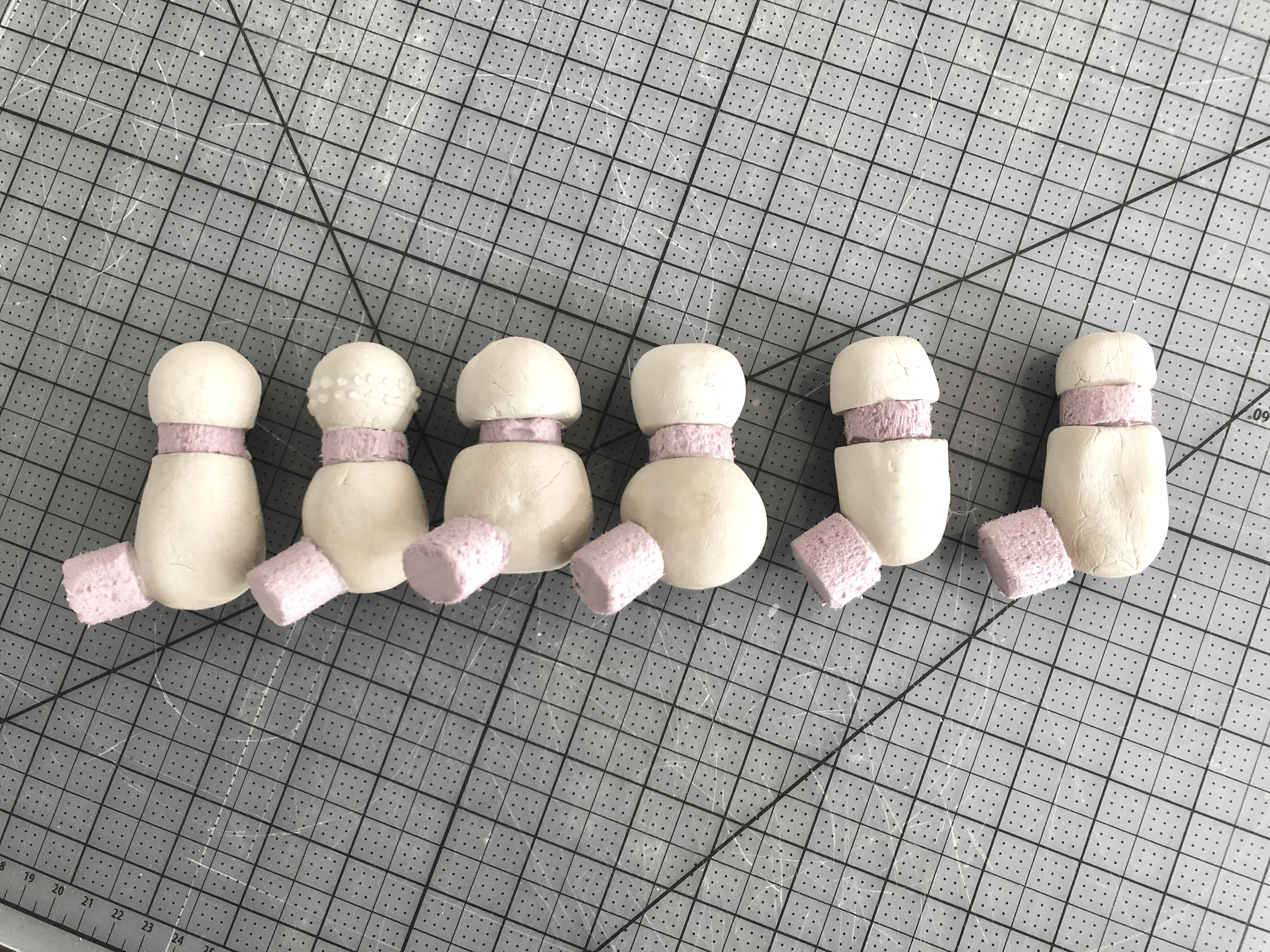
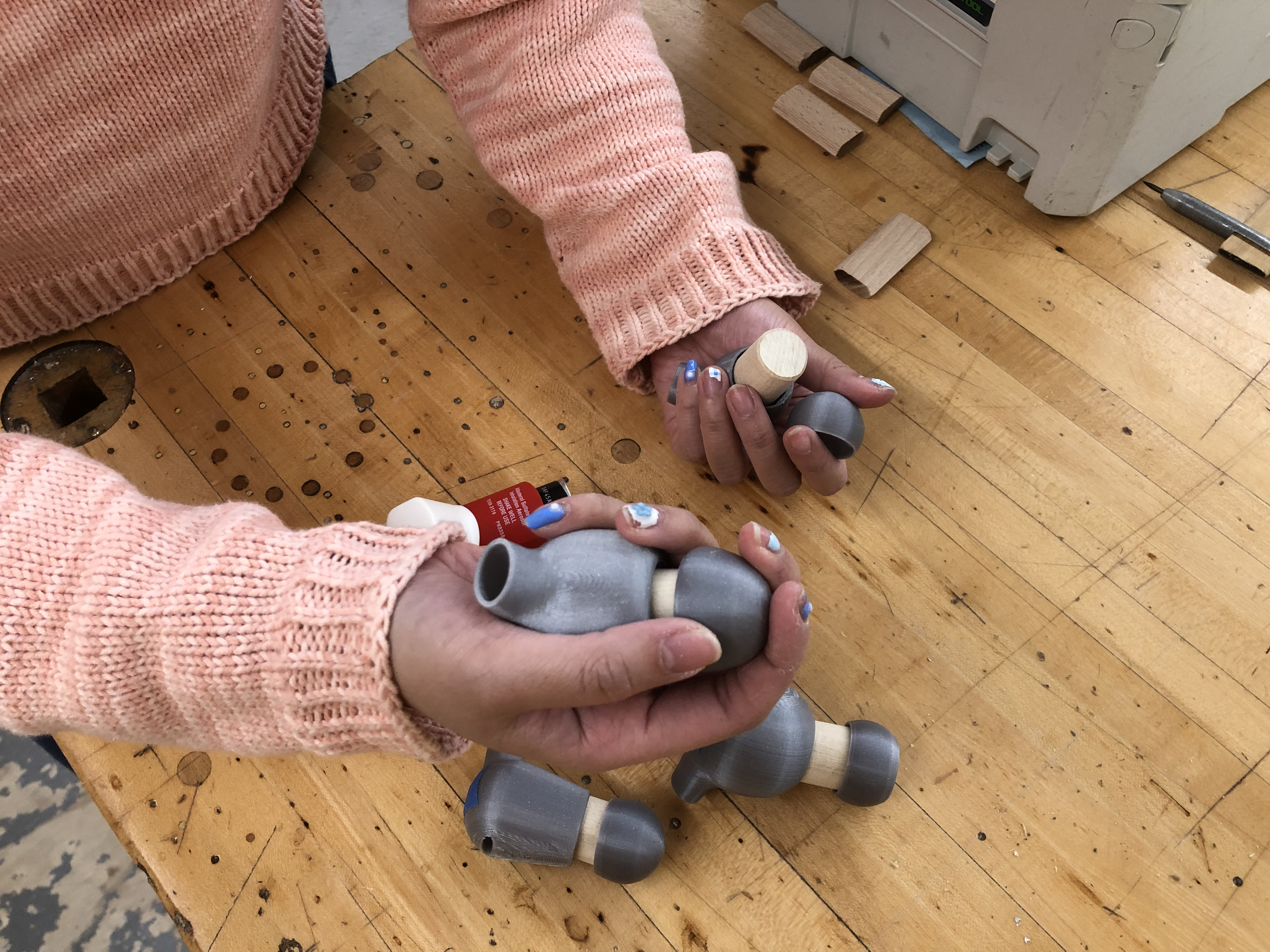
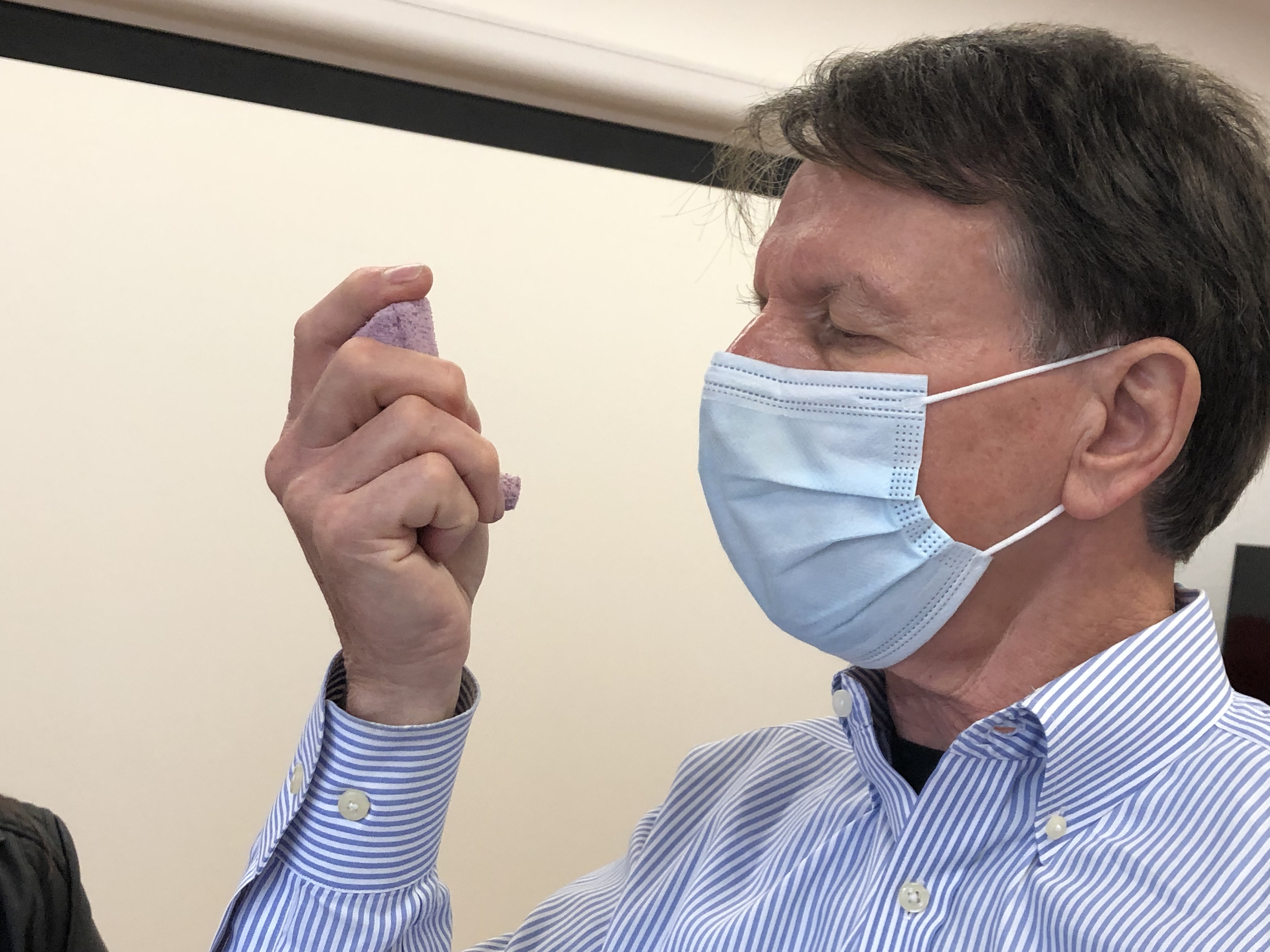
During the prototyping phase, over 20 foam, clay, and 3D printed prototypes were created and tested among 40 individuals to determine the most attractive, most intuitive, and most comfortable shape. Each test involved recording how the user picked up the device, how the user held the device, and how they interpreted the proper orientation.
In addition to device testing, I also created prototypes for the package to determine the best shape and method for delivering clear instructions. The best method I settled on was an instruction unrolling action with a 5 panel instruction series, the happy medium in accordance to Miller’s Law.
According to a 60 person survey, the two colors most commonly associated with breathing clean and fresh air were mint green and sky blue. As such, I made the decision to create a color gradient of the two hues on the package, instructional diagrams, and the inhaler itself.






Final Design


