Mydro
Biomimicry - FA 2021

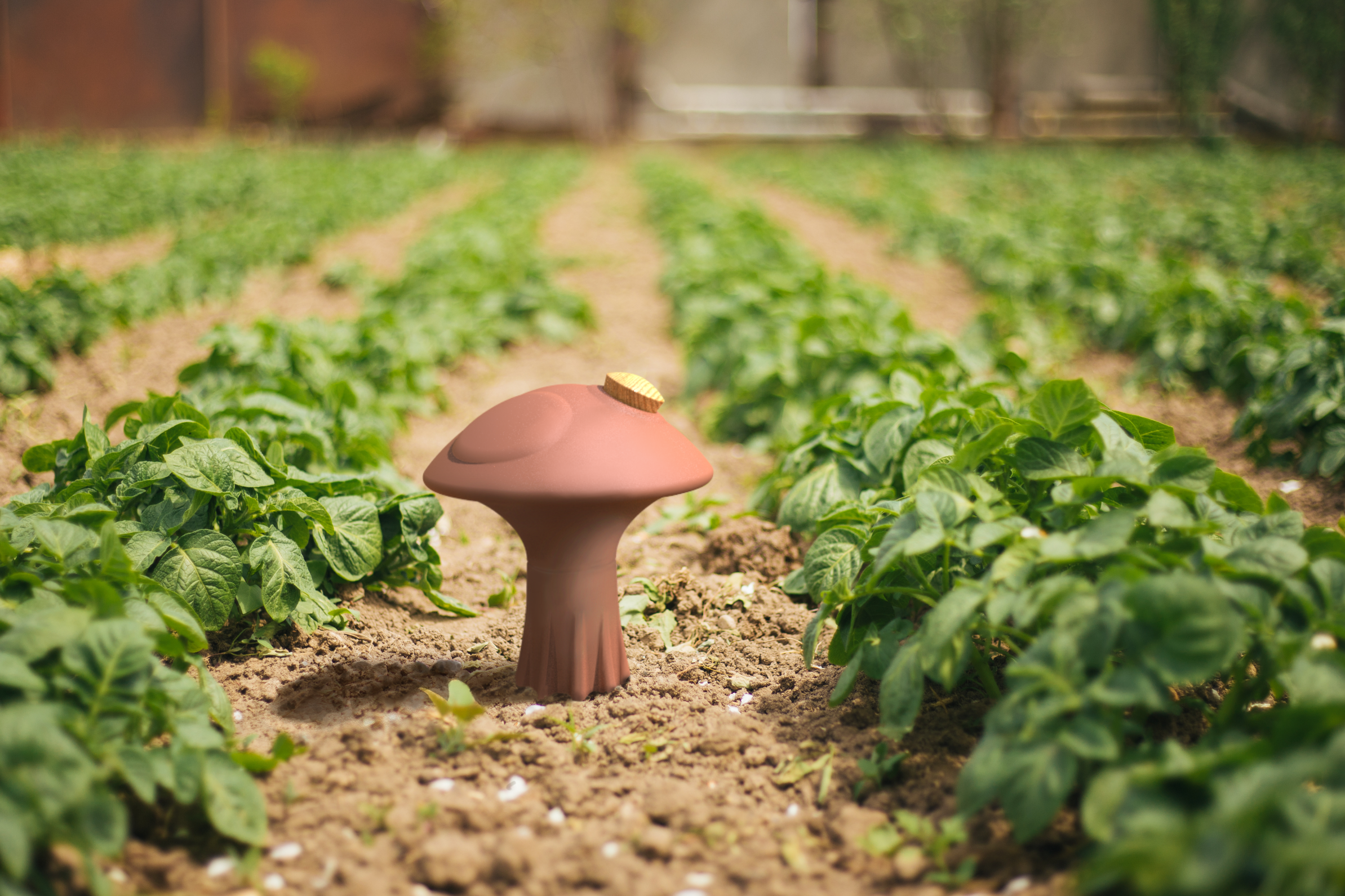
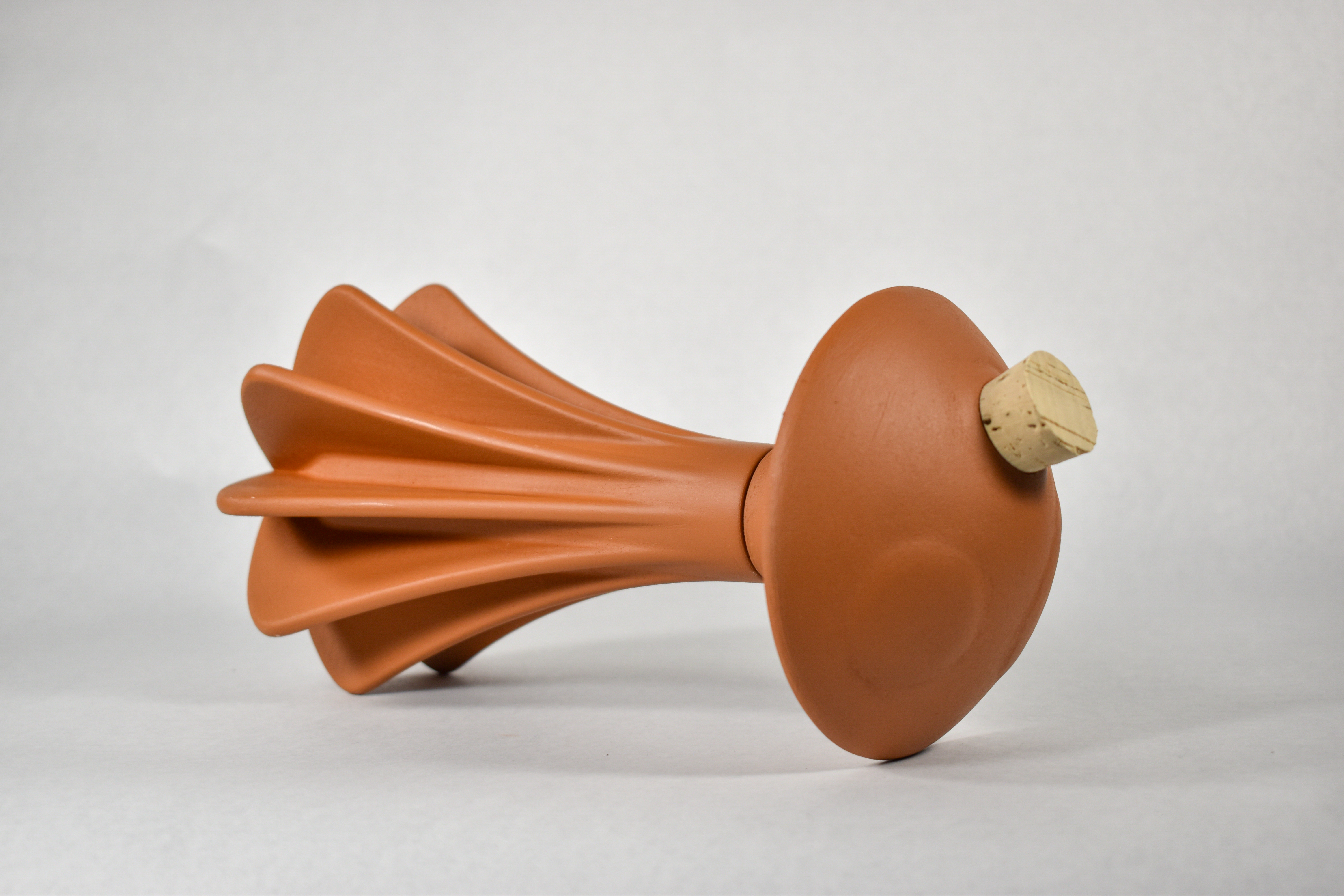
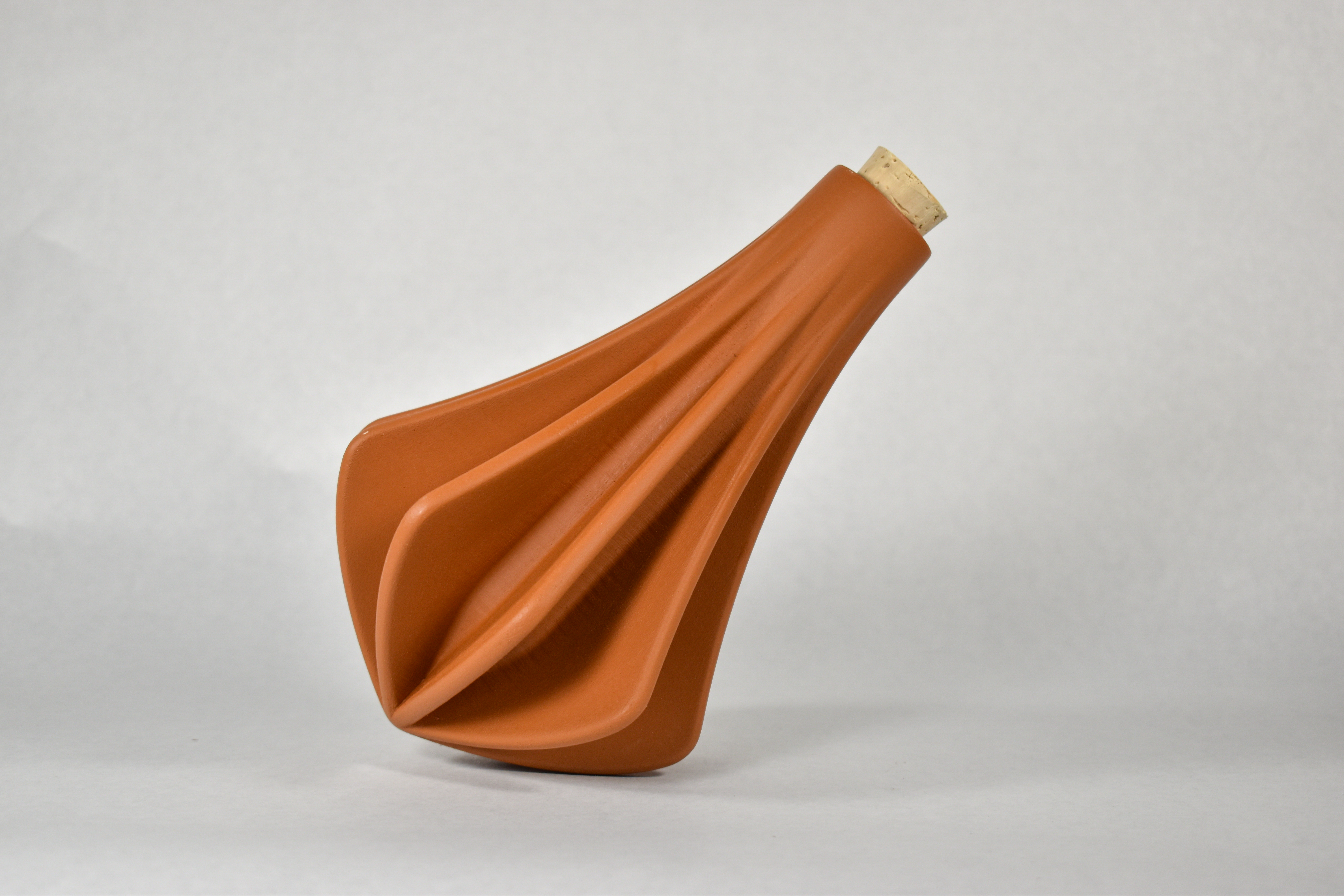
The Mydro is a small urban garden irrigation device, inspired by the structure of mushroom gills. Mushrooms serve as structures for the development of spores, and use stacked gills to maximize the surface area where spores may form, while keeping size to a minimum.
The Mydro combines the porosity of terracotta with the form factor of gills, to increase the surface area and efficiency of soil absorption- while mainting a small size.
The device works by utilizing the porosity of terra cotta to slowly seep water into the soil it is buried in. This ancient time-tested method of irrigation is a highly effective method of passing water directly to the roots of plants, as it skips the the upper layer of topsoil and directly feeds water into the root layer, thus conserving water that would otherwise evaporate from traditional sprinkler methods.
This device comes with two parts; the “mushroom cap” water storage unit, and the “mushroom stem” irrigation device. The stem can be used independently without the water storage unit, if one decides to place the Mydro into a smaller environment.

Process Work
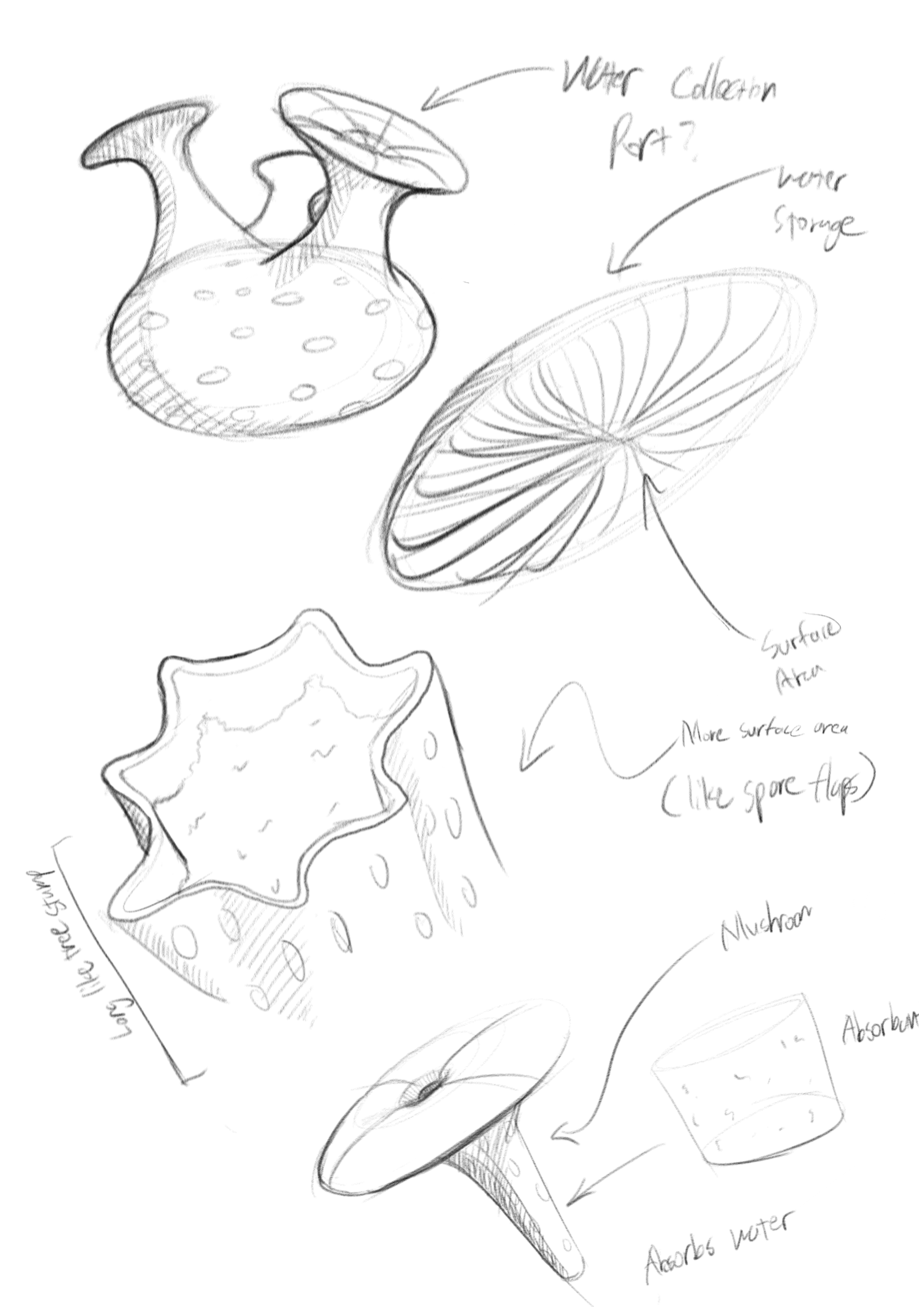


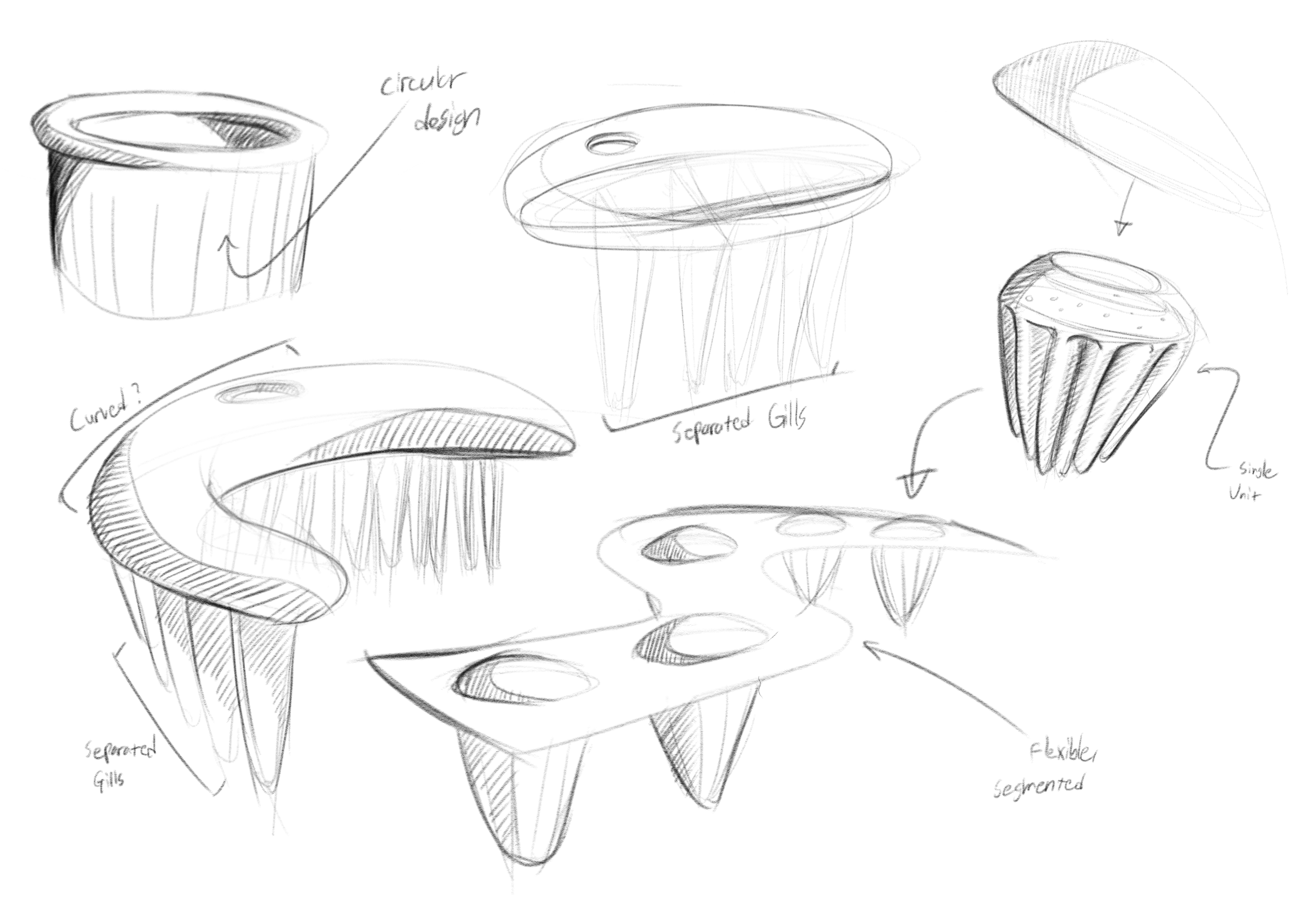
Given that the Mydro was completed in a course themed around Biomimicry, the beginning stages of the process consisted of research on biological adaptations. Evolution itself is an incredible designer, creating some of the most interesting solutions to all sorts of problems organisms may face.
Some colleagues chose sea creatures, a few chose insects. I became fixated on mushrooms for their intricated gill formations, and thus began the task of finding a solution for a real world problem using such shape.
Despite currently living in the tri-state area, I am a Southern California native who is all too familiar with drought and dry land. With our record low rainfalls, devastating fires, and often struggling agriculture industries, I thought about finding solutions for growing plants on soil often too dry and compacted for growth.
Terra cotta irrigation is a common solution for watering small scale vegetable farms and personal gardens, whereby they bypass the hot topsoil and directly release water into the root layer of plants. But common designs often feature a traditional pot shape, which although can reach far, they are often inefficient with the amount of space they occupy. Smaller designs either don’t store enough water, or require a large and unattractive glass bottle peaking over the top.


Images generated by Gemini AI
Pain Points
- Traditional terra cotta irrigation pots take up large amounts of space underground, often displacing precious area for roots to grow.
- Smaller terra cotta irrigation pots will take longer for water to spread through soil, due to limited reach and low contact surface area.
- Terra cotta irrigation spikes are famously unattractive, due to the need for an upside down glass bottle.
Design Opportunities
- Create a terra cotta irrigation device with the same reach as a traditional device, but with less soil displacement.
- Create a device with more surface area contacting soil, allowing for more efficient water absorption through the terra cotta.
- Design a more aesthetically pleasing above-ground water storage device.


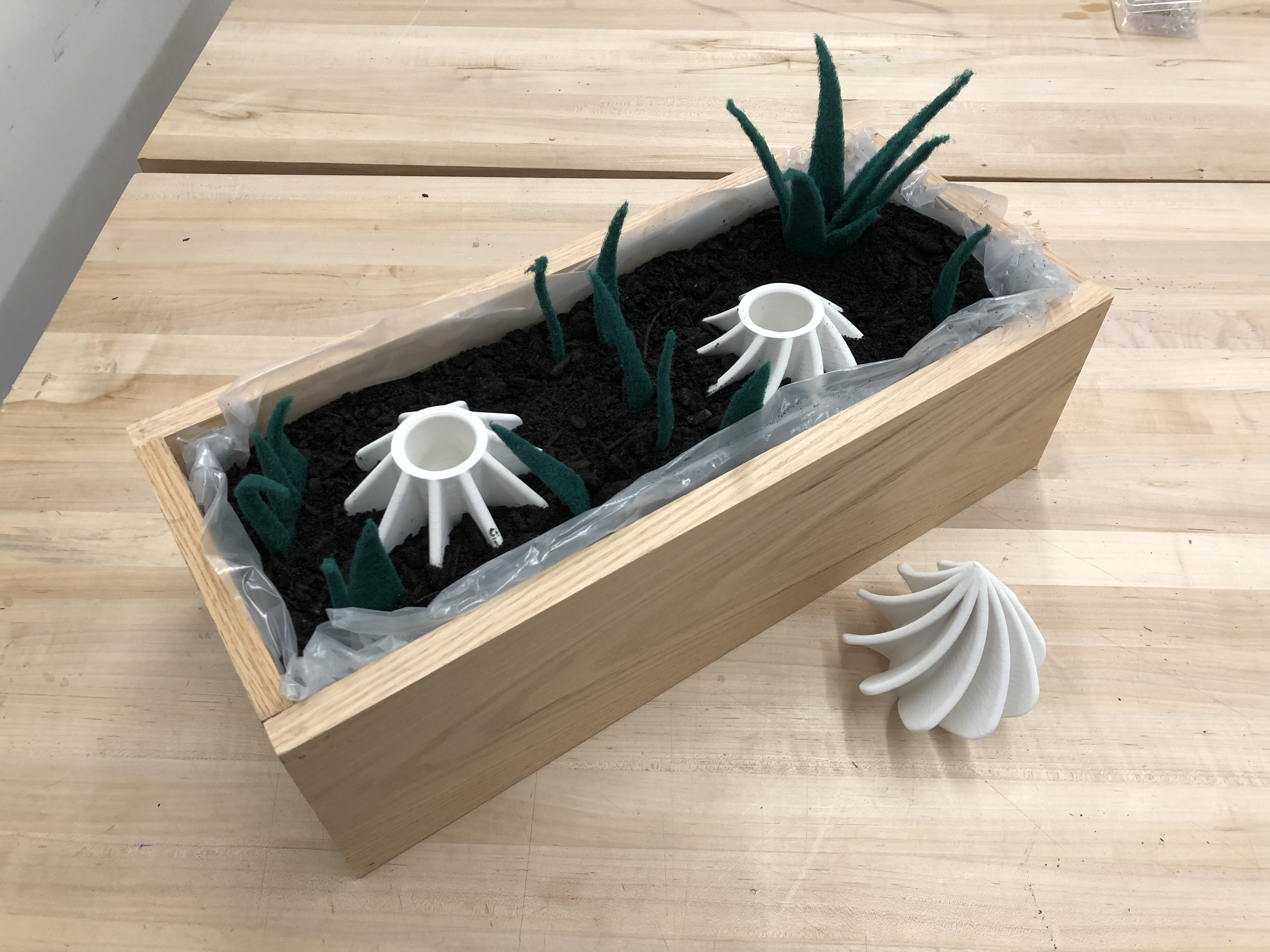

And so, my solution was simple. I wanted to incorporate the concept of gills into the terra cotta irrigation device to maximize the amount of surface area contacting the soil, but reducing the overall footprint to a minimum while keeping the reach the same. More surface area contact means more places for water to be absorbed into the soil, and lower footprint means creating a little more space for soil and roots to grow into between the fins. Same reach means the outermost “tip” portions of each fin in the gill formations reaches the same span as usual terra cotta irrigation devies.
I took inspiration from the form factor of mushrooms and proposed an attractive removable water storage unit on top, for use in larger scale growing. See diagram below for full use cycle of the Mydro device.

Final Design